
The biggest football stadiums in the world
From Pyongyang to Barcelona: the twelve highest-capacity cathedrals in world football, with figures updated after the latest renovations.
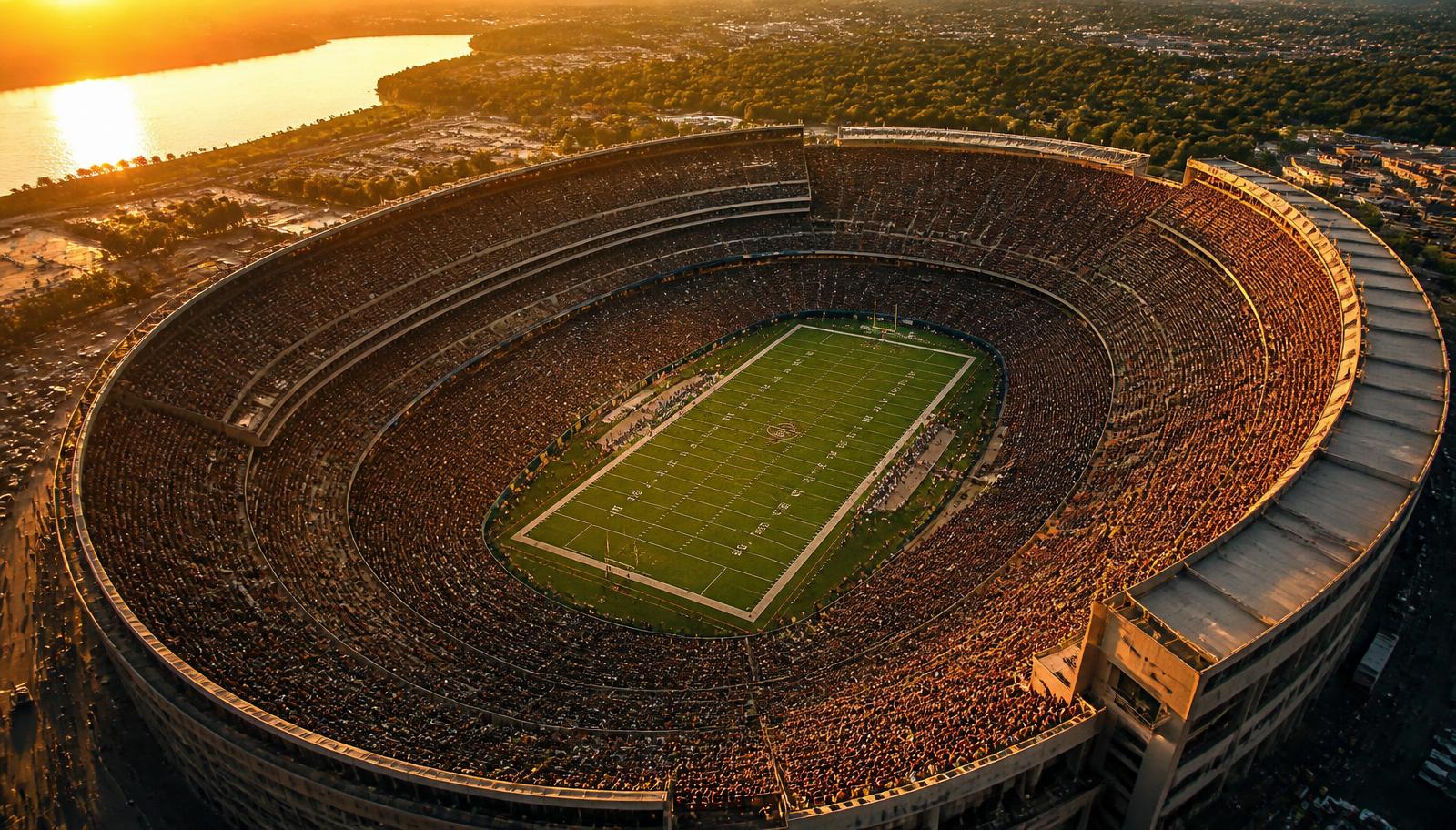
Capacities shift more than you would think: a safety refit removes 10,000 places, an expansion adds 15,000 back. This list ranks football stadiums by current official capacity — not by their record attendance, which at the Maracanã brushed 200,000 back in 1950.
1.Rungrado 1º de Mayo
Pyongyang, North Korea · ≈114,000

The largest stadium on the planet by capacity. Its sixteen-arch roof mimics a magnolia flower, and its main use is not football but the Arirang Mass Games, the biggest human choreography in the world.
2.Spotify Camp Nou
Barcelona, Spain · 99,354 → 105,000 after works

Europe's largest ground since 1957 and currently being rebuilt as part of the Espai Barça project, which will push it beyond 105,000 seats with a third tier and a full roof.
See stadium guide →3.FNB Stadium (Soccer City)
Johannesburg, South Africa · 94,736

The African calabash: its ochre panelled façade imitates a traditional cooking pot. It hosted the 2010 World Cup final and Nelson Mandela's memorial.
4.Wembley Stadium
London, England · 90,000

The largest football stadium in Western Europe by covered seats and the second largest in Europe overall. Its 133-metre arch is visible from half of London.
See stadium guide →5.Estadio Banorte (Azteca)
Mexico City, Mexico · ≈87,000

The only stadium to have hosted two World Cup finals, and in 2026 it becomes the first to see a third tournament. After renovation it retains around 87,000 places.
See stadium guide →6.Estadio Monumental
Buenos Aires, Argentina · 85,018

South America's largest after the running track was removed and the stands were pushed towards the pitch. Host of the 1978 World Cup final.
See stadium guide →7.Bukit Jalil National Stadium
Kuala Lumpur, Malaysia · 87,411

Southeast Asia's largest arena, built for the 1998 Commonwealth Games and now home to the Malaysian national team.
8.Signal Iduna Park
Dortmund, Germany · 81,365 (with standing terrace)

The Bundesliga's biggest capacity and the highest average attendance in world football season after season. Much of the secret is the Yellow Wall.
See stadium guide →9.Santiago Bernabéu
Madrid, Spain · 81,044

Reopened with a retractable roof, a steel façade and a pitch that is stored underground. It lost seats during the works and recovered them with the new tier.
See stadium guide →10.Estadio Luzhnikí
Moscow, Russia · 81,000

Host of the 2018 World Cup final and the 1980 Olympics. Its historic façade was preserved while the entire interior was demolished and rebuilt.
11.Maracanã
Rio de Janeiro, Brazil · 78,838

In 1950 it packed in almost 200,000 people for the Maracanazo; today, all-seater, it holds around 78,000. It remains the emotional temple of Brazilian football.
See stadium guide →12.San Siro
Milan, Italy · 75,923
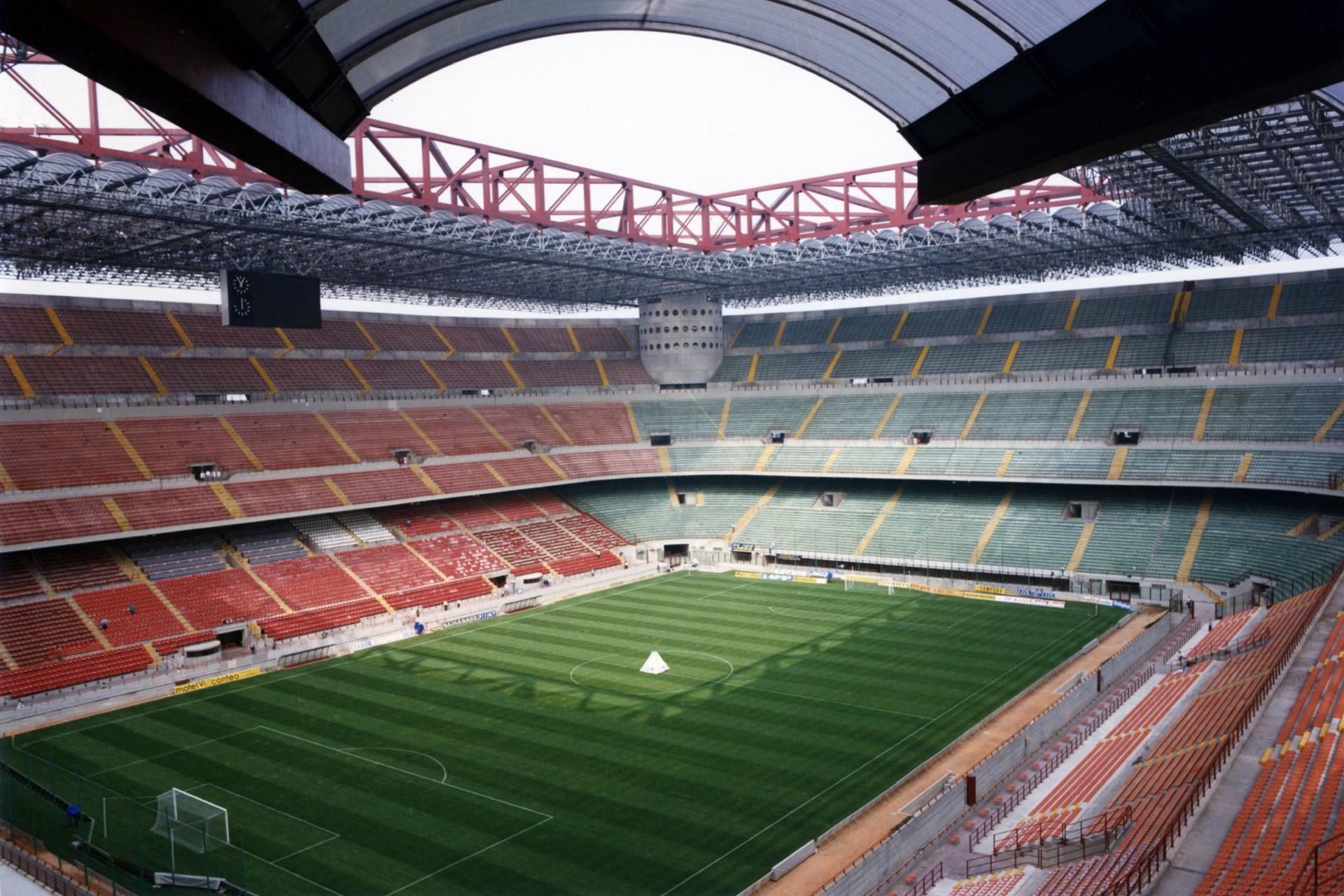
Italy's biggest stadium and one of the few shared by two giants. The third tier added for the 1990 World Cup is also the reason behind its coming demolition.
See stadium guide →Nearly all of these numbers will move before 2030: Camp Nou is growing, San Siro is going away and Old Trafford has a 100,000-seat plan on the table. Bookmark this list and compare it a year from now.