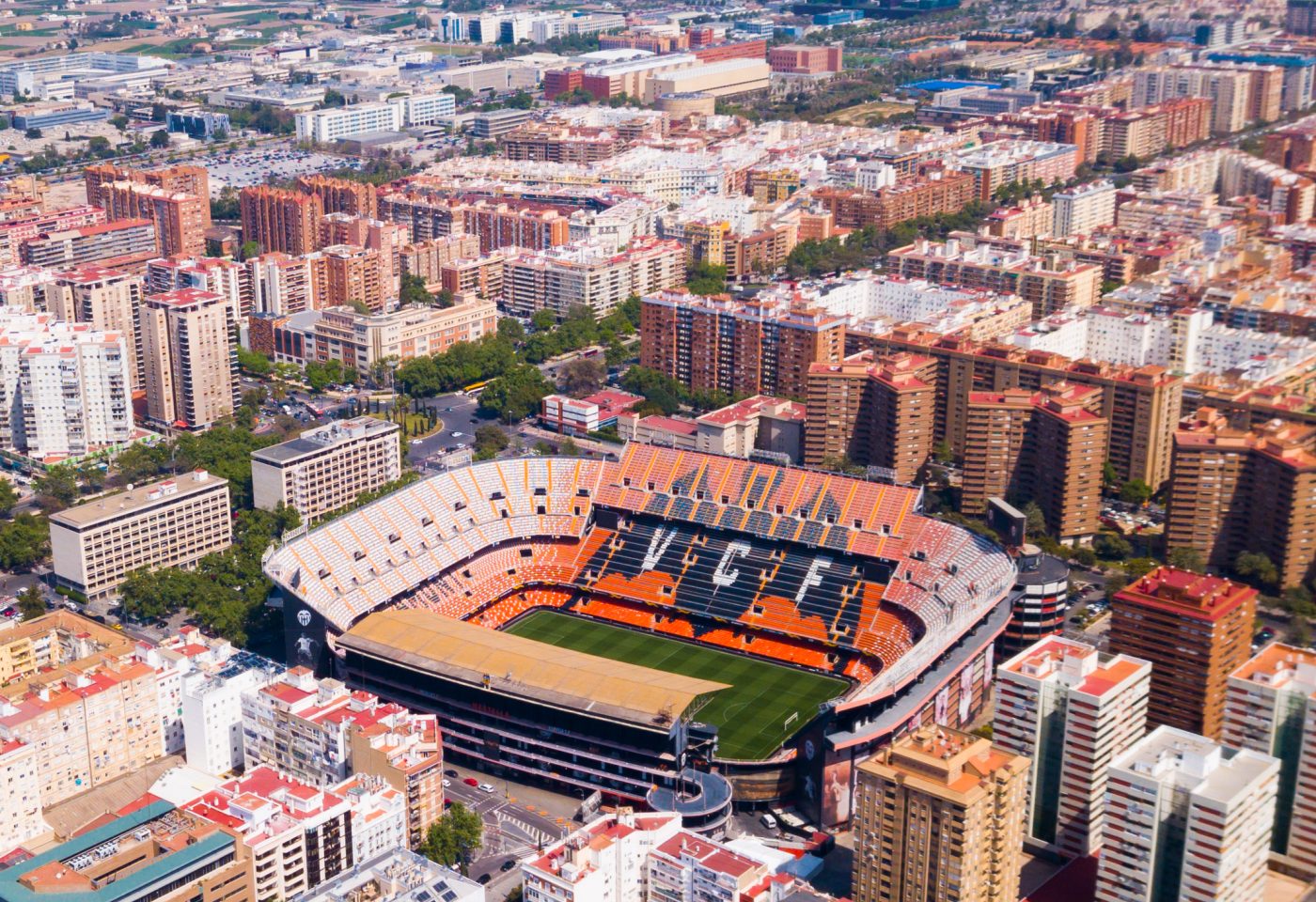
Ramón Sánchez-Pizjuán is Sevilla FC's historic home in the Nervión district, one of Spain's most storied venues. Its ceramic-tiled façade, legendary European nights and tight acoustics make it one of the most feared away trips for any opponent — especially in the Europa League knockouts that Sevilla dominates like no other club.
History and architecture
Opened on 7 September 1958, it takes its name from former president Ramón Sánchez-Pizjuán, who drove its construction. Designed by Manuel Muñoz Monasterio, it has been remodelled several times — notably in 1982 for the Spanish World Cup, when it hosted the classic Germany-France semi-final. Its covered main stand and the mosaic on the façade are its signature features. An ambitious rebuild on the same plot is in the pipeline.
Iconic moments
The Pizjuán is a byword for European nights: Sevilla has completed so many Europa League comebacks here that it is a house tradition (seven titles, an outright record). It hosted the 1982 World Cup semi-final Germany-France, considered one of the greatest games ever played. Derbies against Betis are another headline of the LaLiga calendar.
Getting there and matchday tips
Metro line L1 (Nervión stop) leaves you five minutes away. Bus lines 5, 27, 28 and 32 also serve the ground. It is an easy 30-minute walk from the centre via Luis de Morales. There is no official parking — use Nervión Plaza or come on public transport. Arrive 45 minutes early: the neighbourhood buzzes with beer bars and queues at the gates are moderate.
Where to sit and what to eat
The covered Preferente stand offers the best view and shelter. Gol Norte holds Biris Norte, the club's ultras. VIP boxes have been refreshed with local catering. Nervión is packed with classic beer bars, tapas spots serving Iberian ham and terraces along Luis de Morales for pre-match drinks.
:format(jpg)/f.elconfidencial.com%2Foriginal%2Faca%2F99a%2Fcd1%2Faca99acd1620d845df0aa236cbf0b7f1.jpg)